
WE'RE PROUD PARTNERS OF
EPOXY FLOORS CANADA
THE BEST CALGARY HAS TO OFFER


Canadian Standards
We're a proud partner of Epoxy Floor Canada ensuring the best quality products and practices go into crafting your new floor.
True Canadian Quality.

5 STEP PROCESS
Using a full 5 step system from diamond bit grinding to the final topcoat.
Surface Preperation
Concrete must be mechanically ground before installing epoxy floor coatings because epoxy relies on a strong mechanical bond with the concrete surface. Simply cleaning the floor is not enough.
Moisture Check
Every concrete slab undergoes a non-destructive moisture assessment before a flooring system is selected. For newly poured concrete or slabs exhibiting elevated moisture levels, we include comprehensive moisture testing and appropriate mitigation measures as part of the project scope to ensure long-term coating performance.
Primer Application
Rockhard Fusion Primer penetrates and seals the concrete surface, eliminating pore-related issues such as outgassing that can lead to bubbles and pinholes in the coating system. It also forms a molecular bond with the subsequent base coat, creating exceptional adhesion. Independent testing has measured bond strength at 925 PSI—strong enough that the concrete itself fails before the bond releases. We apply primer on every installation, without exception.
Basecoat and Broadcast
A 100% solids epoxy base coat is installed at a thickness of 15–20 mils to create a durable foundation for the flooring system. For flake floors, decorative chips are broadcast to rejection, meaning flakes are continuously applied until the entire surface is covered and no wet epoxy remains visible. Metallic systems are poured at a heavier build of 20–40 mils, with the metallic pigments carefully manipulated by hand to create unique patterns and visual depth. For quartz applications, natural silica aggregate is broadcast into the wet epoxy base coat to maximize slip resistance and surface grip.
Topcoat Application
The final stage consists of two coats of durable, hard-wearing polyaspartic topcoat. These layers secure and protect the colour beneath, provide resistance against abrasion and everyday wear, and create the floor’s finished appearance.
COATING SYSTEMS
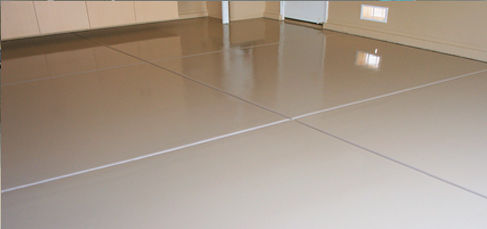
Solid Colour
Solid colour epoxy flooring creates a smooth, consistent appearance with a 100% solids epoxy base coat protected by a durable polyaspartic topcoat. Installed over professionally diamond-ground concrete, this coating system offers commercial-grade strength and long-lasting performance, making it an ideal choice for garages, basements, and utility areas throughout Calgary.

Flake
Solid colour epoxy flooring creates a smooth, consistent appearance with a 100% solids epoxy base coat protected by a durable polyaspartic topcoat. Installed over professionally diamond-ground concrete, this coating system offers commercial-grade strength and long-lasting performance, making it an ideal choice for garages, basements, and utility areas throughout Calgary.
.jpg)
Metallic
Metallic epoxy flooring is a seamless poured coating system that incorporates Rockhard metallic pigments and is protected by a T200 high-gloss topcoat. Every installation is one of a kind, as the pigments are manipulated during application to create striking visual depth, fluid movement, and a distinctive finish. The system is installed over professionally diamond-ground concrete, with a moisture barrier applied when slab conditions require it. All installations are completed in Calgary by XPS Certified Installer Ribal Badin.

Quartz
Our quartz epoxy garage floor system combines natural silica aggregate with a 100% solids epoxy base coat to deliver exceptional traction and outstanding compressive strength. The surface is sealed with a durable polyaspartic topcoat, providing advanced protection against chemicals, abrasion, and daily wear. Specifically designed for Calgary’s demanding climate, this freeze-thaw resistant flooring system can provide up to 15 years of performance when installed with proper surface preparation.
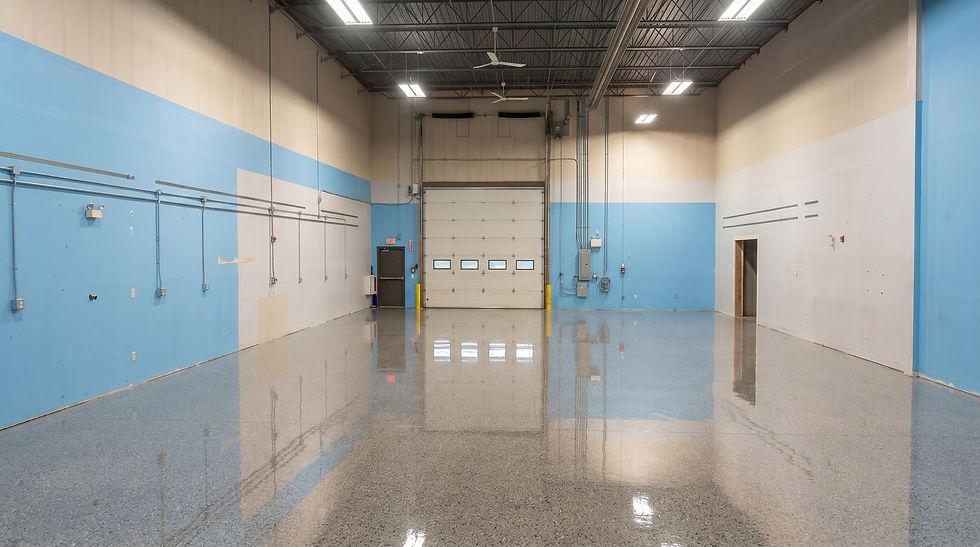
Grind and seal
A grind-and-seal flooring system consists of one or two coats of aliphatic polyaspartic applied over professionally diamond-ground concrete. It is an excellent solution for structurally sound Calgary concrete slabs that require long-term UV resistance and reliable performance in cold-weather conditions. For slabs with elevated moisture levels, a moisture vapor barrier (MVB) primer is installed beneath the polyaspartic coating, allowing the system to be used on concrete surfaces that would not otherwise meet installation requirements.